
When a large tree develops a structural weakness, removal can feel like the only safe option. Often it isn’t. For a tree that’s otherwise healthy and worth keeping — a mature shade tree, a specimen that defines a yard, a canopy that took decades to grow — cabling and bracing can address the weakness and add years of safe life.
Our approach starts from a simple principle: preserve first, remove only when necessary. Support systems are one of the main tools that make that possible.
What cabling and bracing actually do
Both are structural support systems, installed high in the tree, that reduce the stress on a weak point so it’s far less likely to fail.
- Cabling uses flexible steel cable installed between major limbs, up in the canopy. It doesn’t lock the tree rigid — it limits how far limbs can move in wind and under load, taking the strain off a vulnerable union.
- Bracing uses rigid rods installed through or across a specific weak point, such as a split or a crack, to hold it together directly.
The two are often used together: rods to stabilize the immediate weakness, cables to reduce the forces that caused it.
When a tree is a good candidate
Support systems aren’t right for every tree, but they’re worth considering when:
- The tree has a co-dominant stem — two large trunks of similar size competing from a single point, which is an inherently weaker structure than a single dominant leader.
- There’s included bark in a major union, where bark grows into the joint instead of solid wood binding it, creating a weak seam.
- A limb has a crack or split that’s caught early, before it fails completely.
- The tree is otherwise healthy and structurally sound apart from the specific point being addressed.
That last point is the key one. Cabling supports a good tree with a localized problem. It can’t rescue a tree that’s already in serious decline — and part of an honest assessment is telling you which situation you’re actually in.
A cable doesn’t make a tree invincible. It shifts the odds — turning a likely failure into an unlikely one, and buying a valuable tree years of safe life.
What to expect from the process
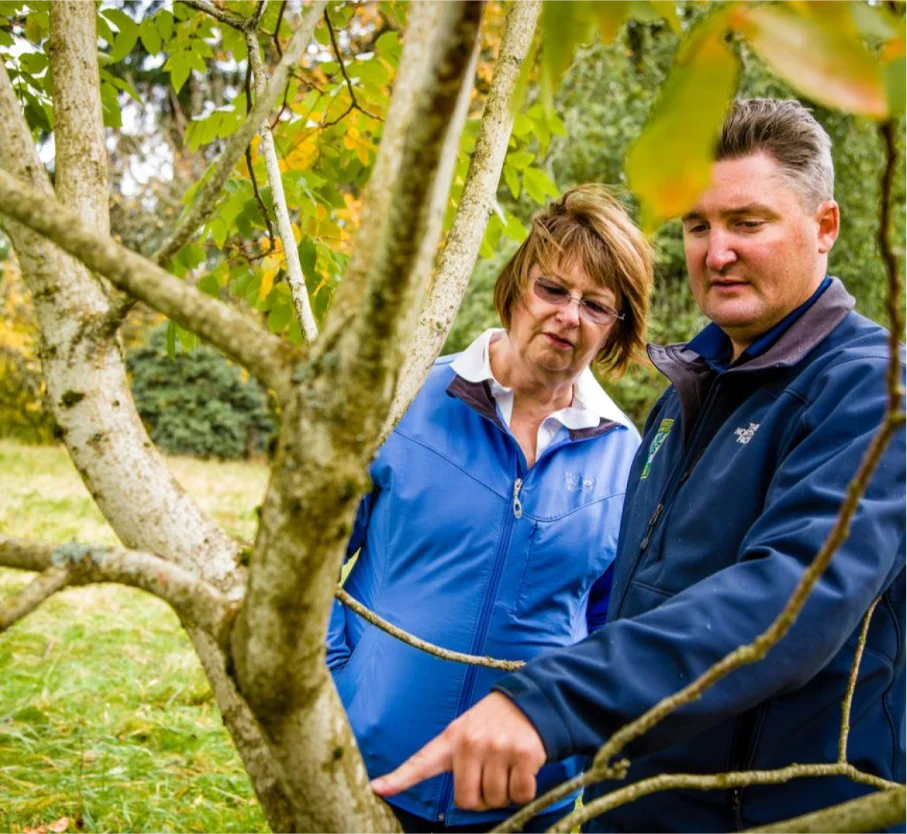
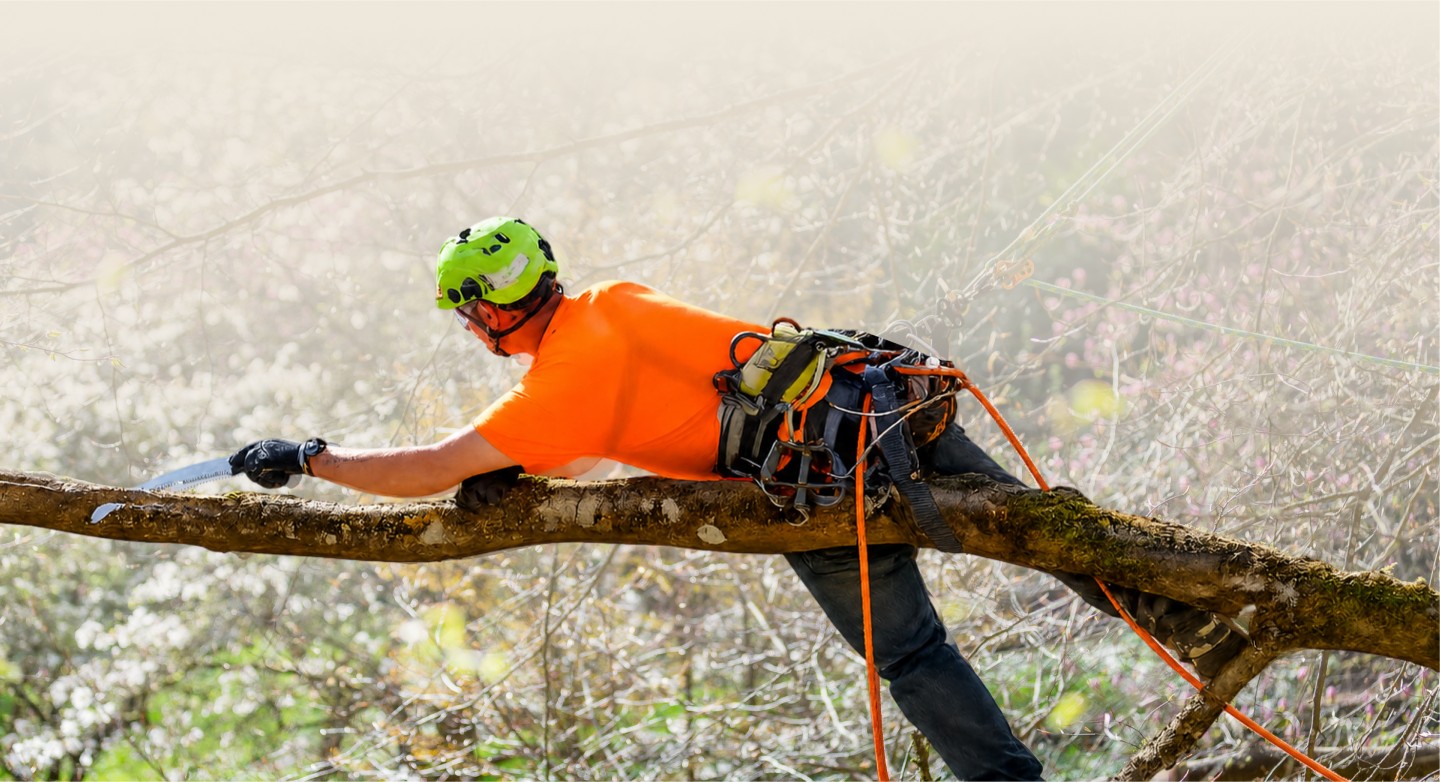
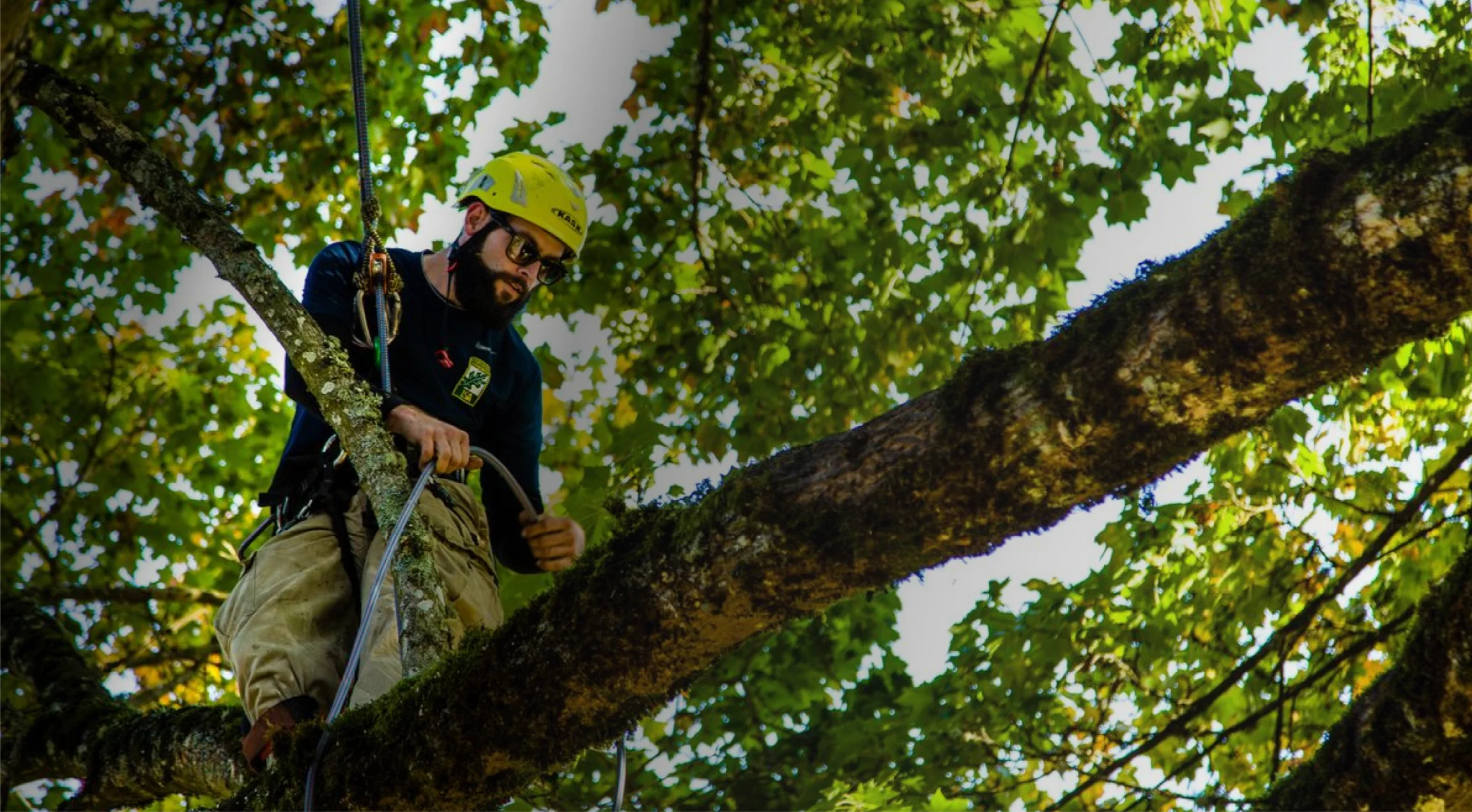
It starts with an assessment. We look at the whole tree, not just the weak point, to confirm it’s a genuine candidate and to plan where support will do the most good. Installation is done from within the canopy, and the hardware sits high in the tree where it’s barely visible from the ground.
Support systems aren’t “install and forget,” either. They should be inspected periodically to confirm the hardware is sound and still doing its job as the tree grows. That ongoing attention is part of caring for the tree properly — not an upsell, just what keeping the system effective actually requires.
Preservation is usually the better outcome
A mature tree is difficult to replace. It provides shade, character, and value that a young replacement won’t match for decades. When a tree can be kept safely, keeping it is almost always the better outcome — for the property and for everything the tree contributes to it.
If you have a tree you’d rather not lose, request an estimate and we’ll assess whether a support system is the right way to preserve it.