
A good landscaper keeps a property looking sharp — mowing, edging, planting, and general upkeep. But trees are a different discipline. They’re large, long-lived, and structurally complex, and the decisions you make about them play out over decades and can carry real safety consequences.
A certified arborist is trained specifically in the biology and mechanics of trees: how they grow, how they fail, and how to keep them healthy for the long term. Here are five situations where that difference matters.
1. There’s deadwood in the upper canopy
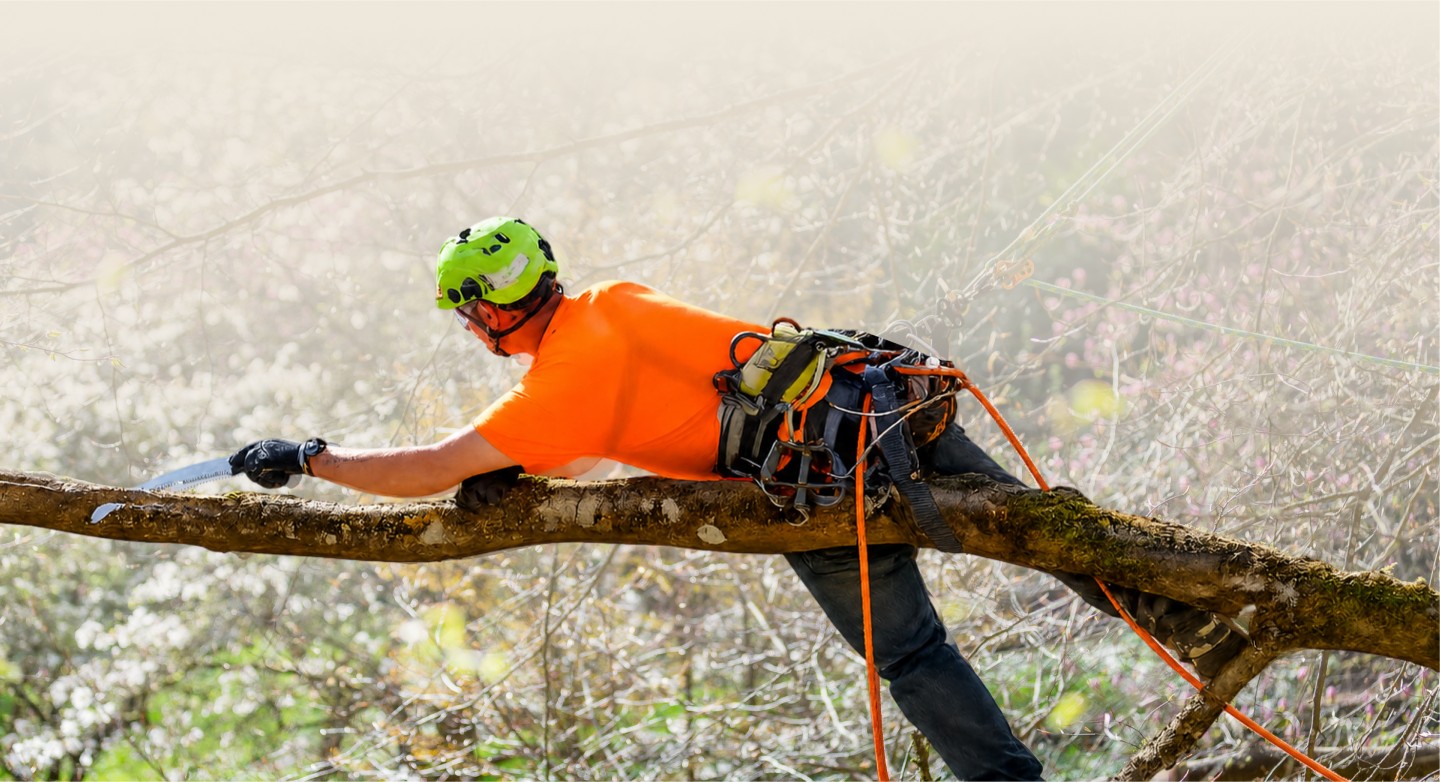
A few dead twigs are normal. But larger dead limbs high in the crown are both a falling hazard and often a symptom of something deeper — root stress, disease, or decline. Removing them safely means climbing or lifting into the canopy and knowing which cuts protect the tree and which invite further problems. That’s arborist territory, not something to reach at from a ladder.
2. You see cracks, cavities, or oozing on the trunk
The trunk tells you a lot about a tree’s structural health. Warning signs worth a professional look include:
- Vertical cracks or splits in the main stem
- Cavities, hollows, or areas of soft, crumbling wood
- Seeping or dark staining running down the bark
- Mushrooms or fungal brackets growing at the base or on the trunk
Any of these can indicate internal decay that isn’t obvious from the outside. An arborist can assess how far it’s progressed and whether the tree can be preserved or has become a risk.
3. The tree has started to lean — or the soil is lifting
A tree that has always leaned is usually fine. A tree that has recently begun to lean is a different story, especially if you can see the soil heaving or cracking on one side of the base. That can signal root or anchorage failure, and it’s one of the situations where a professional assessment shouldn’t wait.
Most tree failures aren’t sudden. The warning signs were usually there for months — they just weren’t visible to an untrained eye.
4. Branches are near power lines
This one is simple: work near power lines is dangerous and, in many cases, restricted. It calls for specific training, equipment, and coordination — never a job for a general crew or a homeowner with a pole saw. If limbs are approaching utility lines, bring in professionals who handle that work safely.
5. Someone recommended topping the tree
“Topping” — cutting a tree down to stubs to reduce its height — is one of the most damaging things you can do to a mature tree. It creates weak regrowth, opens the tree to decay, and often makes it more hazardous over time, not less. If someone has suggested topping as a solution, that’s a strong sign to get a second opinion from a certified arborist, who can usually achieve the real goal — height, clearance, or safety — through proper structural pruning instead.
The bottom line
Landscapers and arborists both have their place. The rule of thumb: if the work is cosmetic and at ground level, a landscaper is fine. If it involves the tree’s structure, health, or safety — or requires getting up into the canopy — it’s worth the arborist.
Not sure which camp your situation falls into? Request an estimate and we’ll take a look. If it’s something a landscaper can handle, we’ll tell you that too.